.svg)
.svg)
.svg)


.svg)


.svg)
.svg)

.svg)

Introduction
In today's modern applications, especially in domains like e-commerce, fintech, and digital platforms, data changes continuously. Business users and analytics teams expect insights almost immediately after a transaction happens. Traditional batch-based data pipelines, where data is processed every few hours or once a day, are no longer sufficient for such use cases.
This article briefly explains how real-time data changes from MongoDB can be captured using native features and processed using a simple Python-based pipeline.
Why Real-Time Data Matters
Earlier, most reporting systems relied on scheduled jobs that processed data with a delay of several hours or even a full day. While this worked in the past, it introduces latency and limits decision-making in fast-moving businesses.
Modern BI tools, dashboards, and downstream systems require near real-time data to:
- Track live orders and transactions
- Monitor operational metrics
- React quickly to business events
MongoDB and Change Data Capture (CDC)
MongoDB provides a built-in mechanism to track data changes internally through the oplog (operations log). Every insert, update, and delete operation is recorded in order.
Using MongoDB Change Streams, applications can listen to these changes in real time without polling the database or running heavy batch jobs. This makes MongoDB a strong choice for event-driven and real-time architectures.
Architectural Diagram:
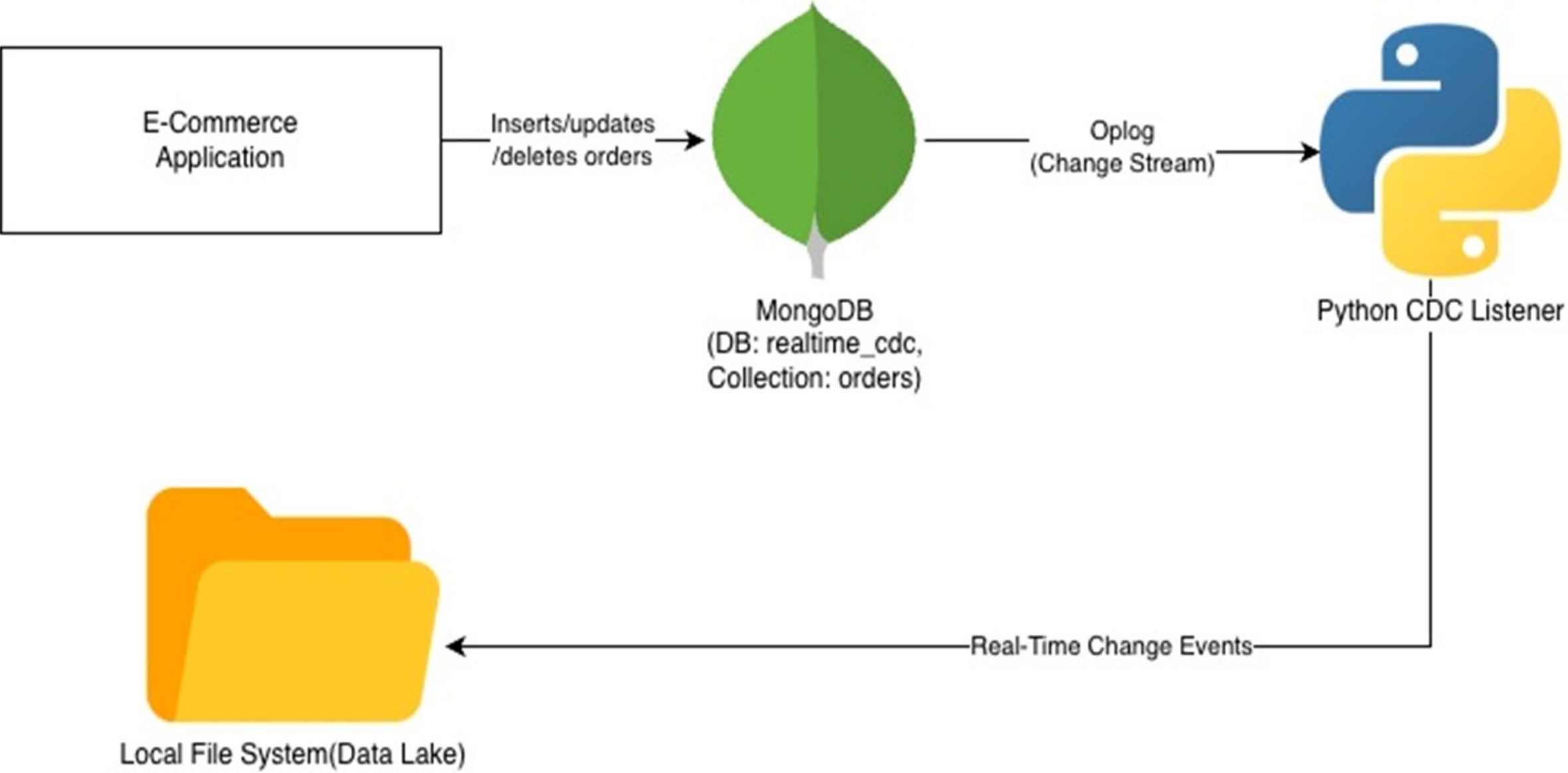
Solution Overview
In this implementation:
- MongoDB Change Streams are used to capture real-time data changes
- A light weight Python pipeline (using PyMongo) listens for these events
- Each change event is written to the local file system
- The file structure follows a simple data lake pattern (date-based folders)
This approach avoids batch processing and enables near real-time availability of data for downstream systems.
Practical Demonstration
A simple demo was created where:
- An orders collection is monitored in MongoDB
- Insert, update, and delete operations are performed
- Each change is immediately captured and stored as a file
This demonstrates how real-time CDC can be implemented with minimal setup and without additional paid services.
Conclusion
Real-time data pipelines are becoming essential for modern applications. MongoDB's native Change Streams, combined with Python, provide a simple and effective way to build CDC pipelines without complex infrastructure.
This approach is especially useful for learning, prototyping, and understanding real-time data movement patterns before scaling to enterprise-level architectures.
Source Code & Hands-On Demo
To help you explore this approach further, the complete source code and demo used in this article are available on GitHub. You can use it as a reference or try the implementation hands-on.
Aravind Rajamani
.svg)
.svg)