.svg)
.svg)
.svg)


.svg)


.svg)
.svg)

.svg)
How Geopits helped a core banking platform resolve performance bottlenecks in a high-volume SQL Server environment

20
300+
50+
18
About
M2P Fintech
The client operates a core banking platform supporting real-time transaction processing, including NEFT, RTGS, UPI, and loan servicing workloads, running on a large-scale SQL Server environment with high evening peak transaction activity.
Business Challenges
The environment had scaled to a high-throughput, always-on transaction workload without a corresponding revisit of patching, indexing, and memory configuration.
The instance was running several cumulative updates behind current, with query optimizer hotfixes and other performance-related trace flags left disabled.
Over 300 indexes were running at 50% or higher fragmentation, with no automated maintenance strategy in place to keep pace with transaction volume.
More than 50 high-traffic tables had no clustered index, forcing heap forwarding and degraded I/O on transaction-heavy workloads.
Duplicate and unused indexes were adding unnecessary write overhead, alongside 18 missing indexes on high-seek columns, several with a substantial estimated query impact.
Evening transaction volumes pushed connection counts well above 1,000, with memory utilization near capacity and no tuned memory, tempdb, or NUMA configuration to absorb the load.
Project Objectives
Geopits scoped the engagement to give the client's engineering team a prioritized, sequenced path to closing performance gaps without disrupting a live, transaction-critical banking workload.
Key Goals:
- Bring the SQL Server instance current on patching and enable optimizer and performance-related trace flags
- Eliminate fragmentation debt and rebuild high-traffic heap tables with proper clustered indexes
- Close index coverage gaps and tune memory, tempdb, and parallelism settings for peak evening load
Solution Provided by Geopits
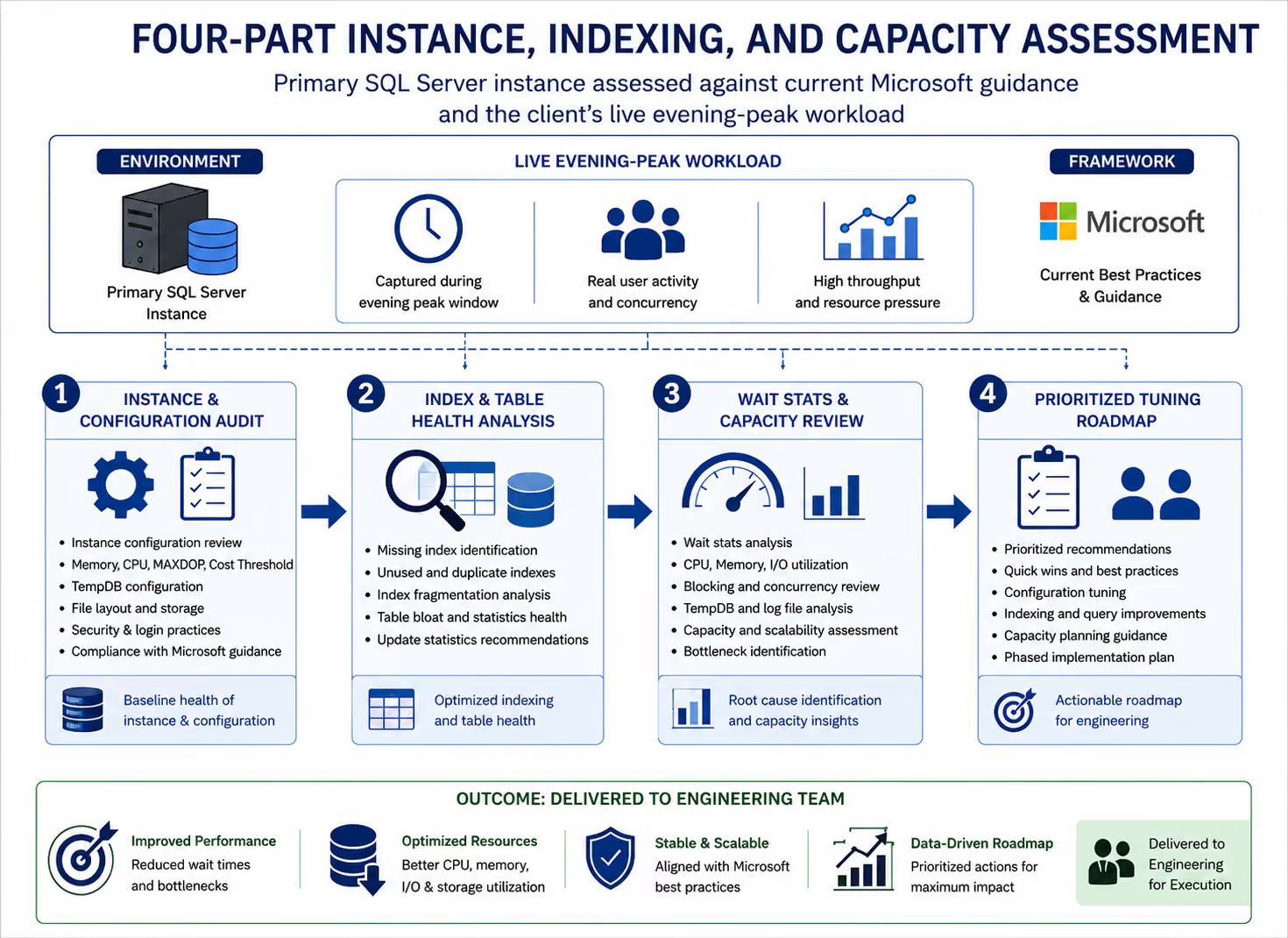
Geopits ran the assessment as a structured, four-part engagement covering configuration, indexing, capacity, and workload patterns.
Reviewed patch level, trace flag configuration, memory allocation, NUMA topology, and parallelism settings against current Microsoft guidance.
Assessed fragmentation, duplicate and unused indexes, missing index opportunities, and heap tables lacking clustered indexes across the core transaction schema.
Analyzed top wait types, disk I/O latency, and connection patterns to isolate where evening peak load was creating contention.
Delivered 20 sequenced recommendations spanning patching, trace flags, indexing, memory, tempdb, and partitioning strategy.
Key outcomes

Prioritized Recommendations Delivered

Fragmented Indexes Identified

Heap Tables Flagged for Clustered Index Rebuild
Missing Indexes Identified
Conclusion
The assessment gave the client's engineering team a clear, prioritized view of where its SQL Server environment stood: where patching had fallen behind, where fragmentation and missing indexes were adding load, and where memory and concurrency settings needed to catch up with evening peak volume. Geopits then worked with the team to roll these changes out in a sequence that protects a live, transaction-critical banking workload throughout.
Ready to Transform Your Data?
Geopits works alongside your team as a strategic partner, starting with stabilizing your current databases, then modernizing your data infrastructure, and ultimately helping you unlock the full potential of AI.


Happy Clients so far
Databases Managed
Successful Migrations