.svg)
.svg)
.svg)


.svg)


.svg)
.svg)

.svg)
High Availability & Disaster Recovery Services
Enterprise high availability and disaster recovery for mission-critical Oracle, SQL Server, PostgreSQL, MySQL, and MongoDB databases. Built for zero data loss, fast failover, and uninterrupted operations.
Ensure Business Continuity with High Availability & Disaster Recovery
High availability and disaster recovery keep mission-critical databases running and data protected through failure, outages, or disasters. Geopits designs and manages business continuity services that pair high availability architecture with disaster recovery planning, so operations continue and data stays intact.
Downtime carries a direct cost, in lost transactions and compliance exposure. Geopits treats enterprise high availability as a managed, always-on discipline, covering disaster recovery architecture, RTO and RPO consulting, and ongoing disaster recovery testing across on-premises, cloud, and multi-cloud environments.
What's Included
Geopits designs failover and recovery architecture around defined RTO and RPO targets, then tests it, so resilience holds up in an actual outage, not just in a planning document.

High Availability Architecture Design
Design and implementation of failover-ready architectures, including clustering, load balancing, and standby configurations tailored to your database platform.

Disaster Recovery Architecture
End-to-end disaster recovery architecture covering primary and secondary site design, replication topology, and recovery workflows.

RTO and RPO Consulting
Defining recovery time and recovery point objectives based on business impact, then engineering the infrastructure to meet them.

Database Replication Services
Synchronous and asynchronous replication setup and management across Oracle, SQL Server, PostgreSQL, MySQL, and MongoDB, including cross-region replication.

Disaster Recovery Implementation
Full setup of failover mechanisms, standby databases, and automated recovery procedures.

Cloud Disaster Recovery
Disaster recovery design and management across AWS, Azure, and Google Cloud, including multi-cloud DR for organisations avoiding single-provider risk.
Disaster Recovery Testing Services
Scheduled and on-demand DR drills that validate failover works under real conditions, not just on paper.

24×7 Monitoring
Continuous monitoring of replication lag, failover readiness, and system health, powered by GeoOps for real-time visibility.

Automated Failover & Failback
Configuration of automated failover for outages and automated failback once primary systems recover, minimizing manual intervention and downtime.
Platforms and Technologies
High availability is engineered for each of these platforms based on how they actually fail and recover. Cloud disaster recovery across AWS, Azure, and OCI is available where the client's environment calls for it.
.svg)
.avif)


How We Work
From identifying gaps to proving recovery under real failure conditions. A complete methodology for achieving dependable HA/DR outcomes.
Who We Are
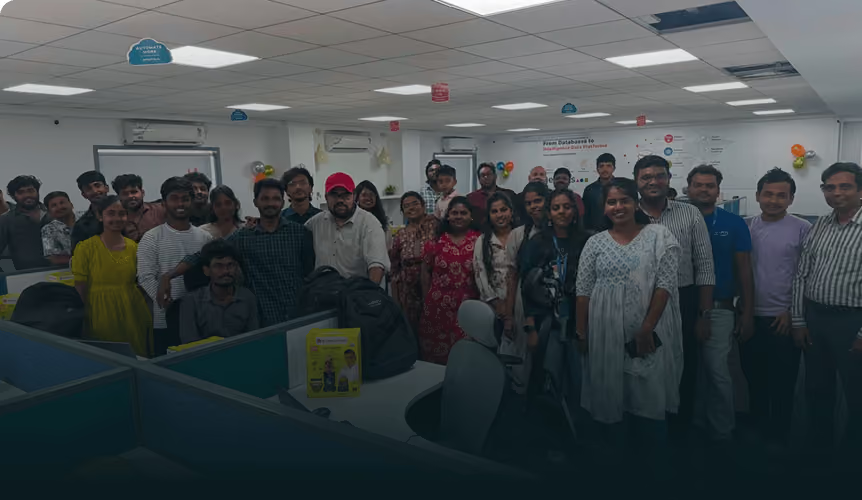
“Geopits is not just a support vendor. We are a long-term data partner.”
We work alongside your team, not just as a vendor you call when things break, but as a partner invested in your success.
Happy Clients and counting
Databases being managed
Successful Database Migrations
DB Transactions per day
Why Teams Choose Geopits
Proactive support, predictable pricing, and certified expertise, no matter which platform your business runs on.

Engineered for the Failure, Not the Demo
HA/DR architectures are designed around how each platform actually fails, not generic templates. Nine years of hands-on failover experience across Oracle, SQL Server, PostgreSQL, MySQL, and MongoDB.

99.99% Uptime
Failover architectures engineered and tested to hold databases at 99.99% uptime, even through infrastructure failure.
.svg)
24×7 AI-Powered Monitoring, Human-Led Support
Replication lag, failover readiness, and system health are monitored continuously through GeoOps, with GeoVertex adding AI-assisted analysis on top. Every alert is backed by an engineer, not just a dashboard.

RTO and RPO Targets We Actually Meet
Recovery targets are defined upfront and tested against, not just documented and left unverified.

Periodic DR Drills
Scheduled failover drills validate that recovery works under real conditions, catching gaps before an actual outage does.

Multi-Region HA/DR by Design
Cross-data-center and multi-region architecture built for geographic redundancy, so a regional outage doesn't take the database down with it.

Audit-Ready Compliance
HA/DR processes run under ISO 27001 and ISO 9001 certified operations, so recovery capability holds up under audit, not just under a demo.
Industries We Serve
Database requirements vary significantly by industry. The uptime threshold for a payment processing system is different from an edtech platform. The compliance surface for a healthcare application is different from a retail analytics stack. Our team has delivered managed DBA services across these verticals.

Banking, Financial Services & Insurance
Core banking, payments, claims and fraud detection all run on databases that cannot go down. Geopits keeps that infrastructure fast, compliant and audit-ready for institutions where uptime and accuracy are non-negotiable.
Know More
EduTech
Geopits manages, secures and modernises the databases behind LMS platforms, student records and learning analytics. Built for edtech companies that need to scale learner numbers without putting student data or privacy at risk.
Know More
Fintech
Geopits manages, secures, and scales the data infrastructure behind payments, lending, wallets, and embedded finance platforms. Built for fintech teams that need to move fast without putting transaction data or compliance at risk.
Know More
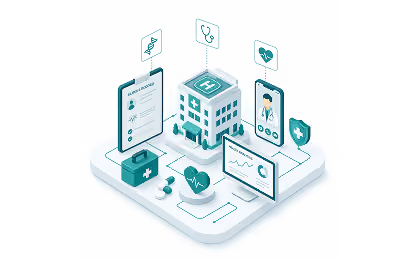
HealthCare
Geopits manages, secures and modernises the databases behind EHR systems, patient records and clinical data. Built for hospitals and health systems where data accuracy, uptime and patient privacy are non-negotiable.
Know More
Logistics
Geopits manages, secures and scales the databases behind booking engines, reservation systems, and loyalty programs. Built for logistics and hospitality platforms that need to handle peak-season traffic without booking data or payments at risk.
Know More
Manufacturing
AI-enabled data management driving efficiency by automating data pipelines, enhancing quality, and accelerating analytics.
Know More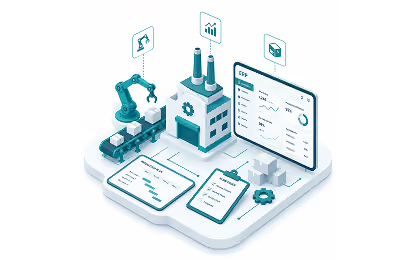


.avif)

Case Studies
From monitoring to modernization, Geopits provides expert database management services that enhance performance, strengthen security, and reduce operational costs.

How a Leading SaaS Collaboration Platform Reached 99.99% Uptime with a Stable and Scalable SQL Environment


How Geopits recovered a healthcare client's SQL Server database with zero data loss
DBCC CHECKDB diagnosis, table-by-table repair, and backup reconciliation restored full database integrity across 26 corrupted tables.


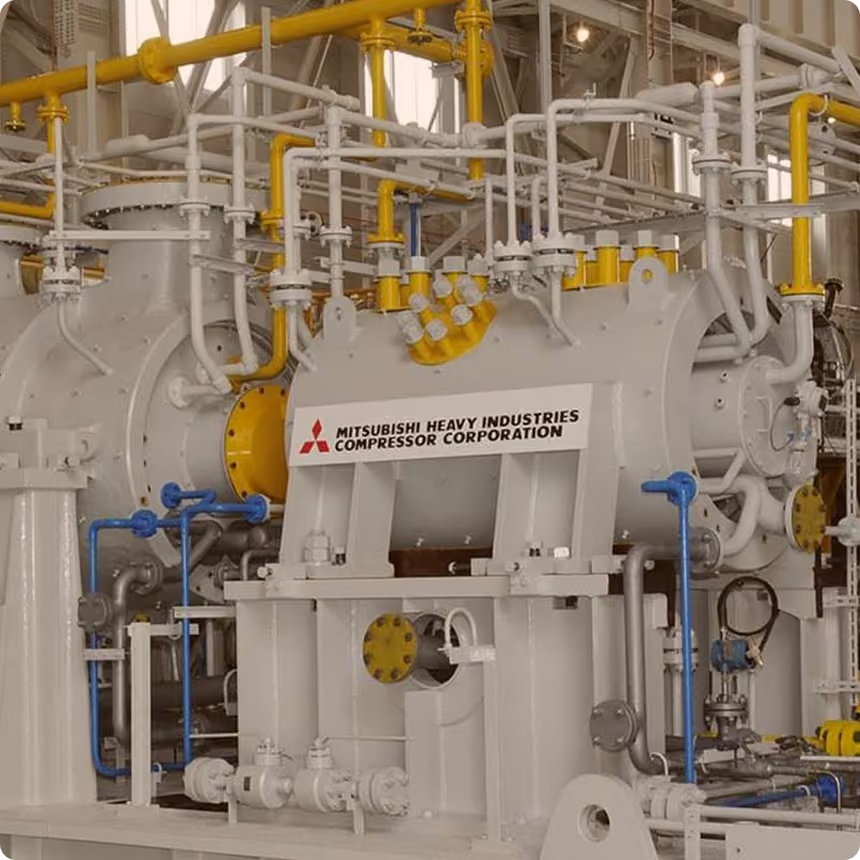
Custom SQL Server high-availability solution for Mitsubishi, airport IoT lift monitoring
Global engineering and manufacturing leader powering aviation, energy, and smart infrastructure worldwide.







-Photoroom%20(1)%20(1).avif)





%20(1).png)



.avif)








Related Resources



Frequently Asked Questions
What is the difference between high availability and disaster recovery?
High availability keeps a database running through component failures with minimal downtime, typically within the same data center or region. Disaster recovery restores operations after a larger-scale outage, such as a regional failure, by failing over to a separate site or region.
What are RTO and RPO, and why are they important for disaster recovery?
RTO (Recovery Time Objective) defines how quickly systems must be restored after an outage, and RPO (Recovery Point Objective) defines how much data loss is acceptable, measured in time. Together they determine the replication strategy, infrastructure design, and cost required to meet business continuity requirements.
How often should disaster recovery be tested?
Disaster recovery should be tested on a scheduled basis, not just after initial setup. Untested DR plans frequently fail during real outages due to configuration drift, so periodic drills are essential to confirm recovery actually works as designed.
What databases does Geopits support for high availability and disaster recovery?
Geopits provides high availability and disaster recovery for Oracle, SQL Server, PostgreSQL, MySQL, and MongoDB, across on-premises, cloud, and multi-cloud environments.
Why choose Geopits for high availability and disaster recovery services?
Geopits engineers HA/DR architectures around how each platform actually fails, backed by 24x7 AI-powered monitoring, human-led support, and periodic DR drills that validate recovery under real conditions rather than just on paper.
Ready to Transform Your Data?
Geopits works alongside your team as a strategic partner, starting with stabilizing your current databases, then modernizing your data infrastructure, and ultimately helping you unlock the full potential of AI.


Happy Clients so far
Databases Managed
Successful Migrations