.svg)
.svg)
.svg)


.svg)


.svg)
.svg)

.svg)
Legacy System Modernization
Geopits modernises legacy applications and infrastructure in phases, closing the gap with current technology demands without disrupting the business running on them. Engagements begin on site with a five day Design Sprint, followed by a fixed scope and cost before any commitment is made.
Modernise the System Without Disrupting the Business Running On It
Legacy system modernisation upgrades outdated infrastructure, applications, and integrations to meet current business and technology demands, without replacing everything at once. Most businesses don't modernise because a system has failed, they modernise because it's still running, just not keeping pace. An application built for a five-year-old business model, a smaller customer base, or a technology stack that's since been deprecated will keep working right up until it becomes the reason a new integration, a compliance requirement, or a scaling plan can't move forward. Geopits works with organisations at that exact point, when the system is stable enough to trust but rigid enough to hold the business back.
What's Included
Geopits assesses ageing infrastructure and phases the modernisation work so systems keep running throughout, with technical debt coming down step by step.

Codebase Modernisation
Updating application code and business logic to current, supportable languages and frameworks

Architecture Redesign
Restructuring the application for scalability and maintainability without a full rebuild

Database and Data Layer Modernisation
Upgrading or migrating the underlying database to a current, supported platform

Integration and API Layer
Replacing brittle point-to-point integrations with stable, maintainable APIs
.svg)
Security and Compliance Updates
Bringing authentication, data handling, and access controls up to current standards

Documentation
Producing system documentation that didn't exist or has gone stale over the years
How We Work
From an on-site design sprint to a fully validated go-live. Here's how we modernize your systems without ever taking them offline.
Who We Are
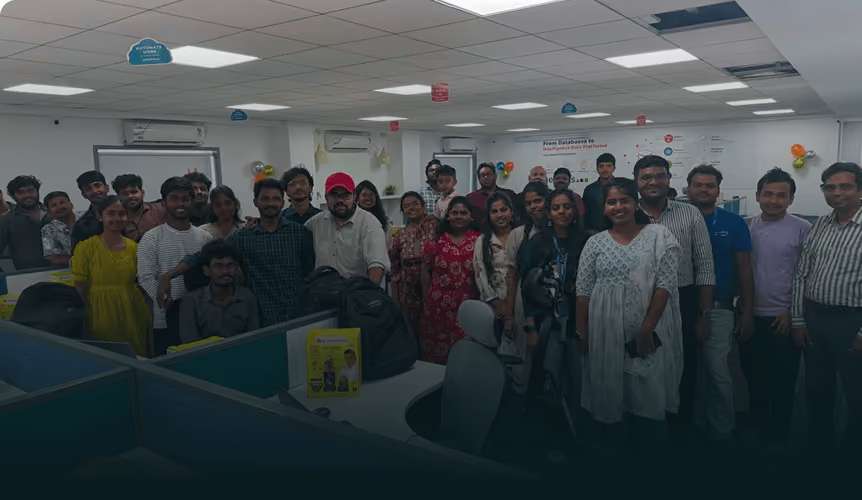
“Geopits is not just a support vendor. We are a long-term data partner.”
We work alongside your team, not just as a vendor you call when things break, but as a partner invested in your success.
Happy Clients and counting
Databases being managed
Successful Database Migrations
DB Transactions per day
Why Teams Choose Geopits
Proactive support, predictable pricing, and certified expertise, no matter which platform your business runs on.

On-Site Design Sprint, Not a Remote Guess
The engagement starts with a 5-day sprint at your office, mapping real dependencies and constraints before any code changes are proposed. The roadmap that follows is built on how your system actually runs, not assumptions from a document review.

Modernise in Place, Not Rebuild from Zero
Working business logic is preserved and upgraded component by component rather than replaced outright. This keeps risk contained and gets critical parts of the system current faster than a full rewrite would.

A BRD and Full Cost Before Any Commitment
The Design Sprint concludes with a Business Requirements Document and end-to-end project cost, not a rough estimate. Work only begins once that scope and cost are reviewed and approved, so there's no ambiguity about what's being delivered or what it costs before the engagement starts.

A Dedicated Team for the Full Engagement
The same team stays assigned from assessment through cutover, so context isn't lost partway through the project or handed off between people unfamiliar with the system.

ISO 27001 and ISO 9001 Certified Operations
Legacy systems often hold sensitive or poorly documented data. Certified processes govern how that data and system access are handled throughout the engagement.
Industries We Serve
Database requirements vary significantly by industry. The uptime threshold for a payment processing system is different from an edtech platform. The compliance surface for a healthcare application is different from a retail analytics stack. Our team has delivered managed DBA services across these verticals.

Banking, Financial Services & Insurance
Core banking, payments, claims and fraud detection all run on databases that cannot go down. Geopits keeps that infrastructure fast, compliant and audit-ready for institutions where uptime and accuracy are non-negotiable.
Know More
EduTech
Geopits manages, secures and modernises the databases behind LMS platforms, student records and learning analytics. Built for edtech companies that need to scale learner numbers without putting student data or privacy at risk.
Know MoreFintech
Geopits manages, secures, and scales the data infrastructure behind payments, lending, wallets, and embedded finance platforms. Built for fintech teams that need to move fast without putting transaction data or compliance at risk.
Know More
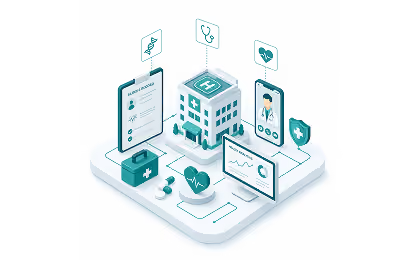
HealthCare
Geopits manages, secures and modernises the databases behind EHR systems, patient records and clinical data. Built for hospitals and health systems where data accuracy, uptime and patient privacy are non-negotiable.
Know More
Logistics
Geopits manages, secures and scales the databases behind booking engines, reservation systems, and loyalty programs. Built for logistics and hospitality platforms that need to handle peak-season traffic without booking data or payments at risk.
Know More
Manufacturing
AI-enabled data management driving efficiency by automating data pipelines, enhancing quality, and accelerating analytics.
Know More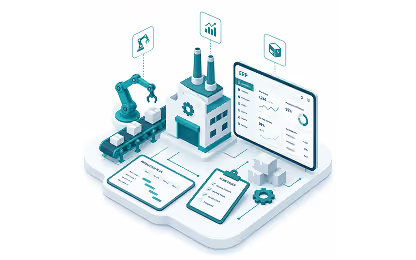


.avif)

Case Studies
From monitoring to modernization, Geopits provides expert database management services that enhance performance, strengthen security, and reduce operational costs.

How an AIA Leading Insurance Provider in Indonesia Successfully Migrated 65 SQL Server Instances and 300+ Databases to Azure SQL Managed Instance with Minimal Downtime - Powered by Geopits
Indonesian life insurance subsidiary of AIA Group, part of Asia's leading life and health insurance provider.


How Geopits Migrated a 1TB SQL Server Database to PostgreSQL With Zero Data Loss
India's first customized in-store solutions company helping FMCG brands and retailers track, measure, and optimize retail execution through field audits, compliance, and sales intelligence.








-Photoroom%20(1)%20(1).avif)





%20(1).png)




.avif)









Related Resources



Frequently Asked Questions
What counts as a legacy system that needs modernisation?
A system built on outdated technology that's becoming difficult to maintain, integrate, or scale, even if it's still functioning. In India, this is commonly ERP, banking core systems, or in-house applications built 8 to 10+ years ago on stacks the original developers may no longer support.
How long does a legacy system modernisation project take?
Most Indian mid-market engagements run 4 to 9 months depending on scope, with mainframe or core banking systems taking longer. Full timelines are confirmed only after the Design Sprint, since undocumented dependencies are common in older Indian enterprise systems.
Will modernising our system disrupt daily operations?
A phased approach is used specifically to avoid disruption, but some downtime windows are usually unavoidable during cutover. These are scheduled around low-traffic periods and communicated in advance.
What does legacy system modernisation typically cost in India?
Cost depends heavily on system complexity and scope, and Geopits does not quote fixed pricing without an assessment. A full cost is shared after the Design Sprint, once dependencies and effort are clear, and work begins only after that cost is approved.
What is enterprise application modernisation, and how is it different from legacy system modernisation?
Enterprise application modernisation usually refers to upgrading specific business-critical applications within a larger legacy environment, while legacy system modernisation covers the full ecosystem around it, infrastructure, integrations, and data. At Geopits, application-level modernisation is treated as part of the same engagement rather than a separate service.
Ready to Transform Your Data?
Geopits works alongside your team as a strategic partner, starting with stabilizing your current databases, then modernizing your data infrastructure, and ultimately helping you unlock the full potential of AI.


Happy Clients so far
Databases Managed
Successful Migrations